
The spurt in rates, caused by the rally in international oil prices, has led to the oil ministry asking the finance ministry for a cut in excise duty in the Union Budget 2018-19, to be presented in Parliament next week.

State-owned oil companies are losing about Rs 4 per litre on petrol, industry officials said.
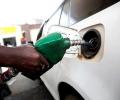
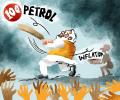
Petrol price on Saturday crossed the Rs 100-a-litre mark in Mumbai after the 15th increase in fuel prices this month. Petrol price was increased by 26 paise per litre and diesel by 28 paise a litre, according to a price notification of State-owned fuel retailers.
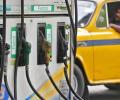
Petrol price cut by Rs 1.46, diesel by Rs 1.53 per litre
The government may marginally increase petroleum prices, petroleum secretary M S Srinivasan on Tuesday said.
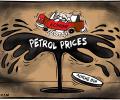
Petrol price on Tuesday crossed Rs 99 a litre mark in Mumbai after oil companies raised petrol and diesel rates on surge in international oil prices. Petrol price was increased by 27 paise per litre and diesel by 29 paise, according to a price notification of state-owned fuel retailers. The hike - tenth this month - pushed petrol and diesel prices to an all-time high across the country. In Delhi, petrol rates climbed to Rs 92.85 a litre and diesel rose to Rs 83.51.
The Bharatiya Janata Party came down heavily on the United Progressive Alliance government on Monday, for its decision to announce the hike in petroleum product prices, before the budget presentation. BJP spokesperson Rajeev Pratap Rudy said that this was a gross violation of secrecy that is observed during the budget preparation exercise.

'Growth will definitely continue to come most from the sub-four-metre SUV segment, primarily because that is where the heart of economy and affordability is. Naturally, that will keep pushing the share of that segment (in overall PV sales) higher.'
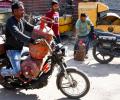
Cooking gas or Liquified Petroleum Gas (LPG) price has been raised by Rs 50 per cylinder by distribution companies, Union Oil Minister Hardeep Singh Puri said on Monday.

While the Syros shines in many areas, its ride quality is a point of contention, notes Rajesh Karkera.
For the second time in as many months, the Government on Wednesday night cut petrol price by Rs 5 a litre and diesel by Rs 2 per litre, while the domestic LPG rate was also slashed by as much as Rs 25 per cylinder.

In 12 hikes, petrol price has gone up by Rs 6.55 per litre and diesel by Rs 7.04 a litre.
Petrol, diesel prices hiked by 40 paise
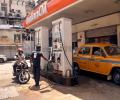
Petrol and diesel prices on Tuesday were hiked for the sixth time this month, propelling prices to cross the Rs 100-a-litre-mark in places from Nanded in Maharashtra to Rewa in Madhya Pradesh to Jaisalmer in Rajasthan. Petrol price was hiked by 27 paise a litre and diesel by 30 paise per litre, according to a price notification by state-owned fuel retailers. The increase took petrol and diesel prices to their highest-ever level across the country. In Delhi, petrol now comes for Rs 91.80 per litre and diesel is priced at Rs 82.36.
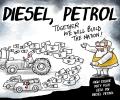
Petrol and diesel price soared to an all-time high across the country on Friday after rates were hiked again by 25 paise and 30 paise a litre, respectively. The price of petrol in Delhi rose it its highest ever level of Rs 101.89 a litre and to Rs 107.95 in Mumbai, according to a price notification of state-owned fuel retailers. Diesel rates too touched a record high of Rs 90.17 in Delhi and Rs 97.84 in Mumbai.
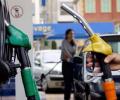
As the world's third-largest oil importer and consumer, India is running out of options as the relentless surge in international oil prices make it imperative to pass them on to consumers, officials said on Monday. India imports 85 per cent of its crude oil needs and about half of its natural gas requirement. While the imported crude oil is turned into fuels such as petrol and diesel, gas is used as CNG in automobiles and fuel in factories.
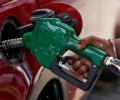
The fuel price hike for the last 16 days had caused inconvenience and disappointment among the general public.
Petrol price on Friday scaled to Rs 102 per litre in some parts of Rajasthan and Madhya Pradesh after rates were raised for the fourth straight day after ending more than two-week-long hiatus during assembly elections in states like West Bengal. On Friday, petrol price was hiked by a steep 29 paise per litre and diesel by 31 paise a litre, according to a price notification by state-owned fuel retailers. This took the price of petrol in Delhi to Rs 91.27 per litre and that of diesel to Rs 81.73.
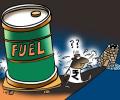
Prices of both petrol and diesel rose for the first time in over 12 months as oil marketing companies raised rates to make up for rising cost of production. The rupee-dollar exchange rate also played spoilsport. Petrol price was on Monday hiked by 5 paise per litre and diesel by 10 paise a litre.
The Appellate Tribunal for Electricity has admitted the OMCs' plea challenging the Petroleum and Natural Gas Regulatory Board's power to adjudicate on the matter.
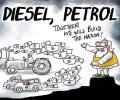
Petrol and diesel prices are unlikely to be increased despite firming raw material costs because of upcoming general elections next year, Moody's Investors Service said. Three state-owned fuel retailers -- Indian Oil Corporation (IOC), Bharat Petroleum Corporation Ltd (BPCL) and Hindustan Petroleum Corporation Ltd (HPCL) -- which control roughly 90 per cent of the market, have kept petrol and diesel prices on freeze for a record 18 months in a row. This is despite the raw material (crude oil) cost surging last year, leading to heavy losses in first half of 2022-23 fiscal year before easing oil prices propelled them to profitability.

The price of liquefied petroleum gas cylinders across all categories, including subsidised LPG, was on Wednesday hiked by Rs 25 per cylinder -- the third straight increase in rates in less than two months.
After Rajasthan, Madhya Pradesh and Maharashtra, petrol price has crossed the Rs 100-per-litre mark in Leh, in almost all districts of Andhra Pradesh and parts of Telangana after fuel prices were again hiked on Friday. Petrol price was increased by 27 paise per litre and diesel by 28 paise a litre, according to a price notification of state-owned fuel retailers. The hike - 18th in the last one month - took fuel prices across the country to a historic high. In Delhi, petrol hit an all-time high of Rs 94.76 a litre, while diesel is now priced at Rs 85.66 per litre.
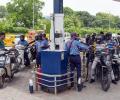
Petrol and diesel price hikes are likely to resume after state elections get over next week to bridge the Rs 9 a litre gap created by international oil prices soaring past $100 a barrel. International crude oil prices shot above $110 a barrel for the first time since mid-2014 on fears that oil and gas supplies from energy giant Russia could be disrupted, either by the conflict in Ukraine or retaliatory western sanctions. The basket of crude oil India buys rose above $102 per barrel on March 1, the highest since August 2014, according to information from the Petroleum Planning and Analysis Cell (PPAC) of the oil ministry.

The GST Council on Wednesday approved two slabs of 5 per cent and 18 per cent effective from September 22, the first day of Navaratri.
The government may further reduce petrol, diesel and domestic LPG prices just before the General Elections are announced in February, a senior official said.

Passenger vehicle dispatches from companies to dealers declined 9 per cent year-on-year to 321,840 units in August.

The Andhra Pradesh government has prepared an action plan for relief and essential supplies in pre-cyclone preparedness for Cyclone Montha, expected to cross the coast on October 28.

The offroad legend 2025 Mahindra Thar launched at an eye-popping Rs 9.99 lakh, writes Rajesh Karkera/Rediff.com.
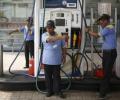
The cumulative increase since the oil companies started the cycle on June 7 now totals to Rs 9.17 for petrol and Rs 11.14 for diesel.

'I have no problems with the finance ministry or with state governments treating petrol pump prices as the last resort for meeting their ambitious spending targets with very limited revenue resources.' 'But let's do away with this smokescreen of free pricing of petrol and diesel and go back to administered pricing regime,' says Dr Sudhir Bisht.

In a much-needed relief to cash-strapped airlines, this is the second straight monthly reduction in rates and the biggest single cut ever.

'In the January-August period, the share of hatchback in the overall PV industry sales was about 22.4 per cent. In the September-October period, the share of hatchbacks has come down to 20.4 per cent. In just October, their share was just 20 per cent. This is simple wholesale data from industry body SIAM.'

Electric vehicle (EV) manufacturers breathed a sigh of relief after the GST Council on Wednesday night retained the concessional 5 per cent rate on EVs, though they now face competition from small petrol and diesel cars, which will attract a lower 18 per cent levy.
The country's chief economic adviser Kaushik Basu had last month said he expects the hike in fuel prices to lead to one percentage point rise in inflation.

Days after a Rs 3 per litre rise in petrol prices, it is the turn of compressed natural gas. Indraprastha Gas (IGL), monopoly marketer of CNG in and around this metropolis, is looking at raising the price by up to six or seven per cent (Rs 2 per kg) sometime next week, due to higher cost on account of a weakening rupee.
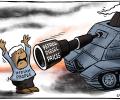
Uttam Ghosh offers his take on the daily increase in the prices of petrol and diesel.
State-owned oil firms are losing Rs 1.32 a litre on petrol as international oil rates have firmed up during the last two weeks.
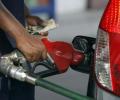
Petrol and diesel prices, which have been on a freeze for the past four months in view of assembly elections in states like Uttar Pradesh, need to be increased by over Rs 12 per litre by March 16 for fuel retailers to break even. International crude oil prices shot above $120 a barrel for the first time in nine years on Thursday before retreating a little to $111 on Friday, but the gulf between cost and retail rates has only widened. With international oil prices - on which domestic fuel retails are directly benchmarked - spiking in the last two months, state-owned fuel retailers "need a massive price hike of Rs 12.1 per litre on or before March 16, 2022, just to breakeven and a price hike of Rs 15.1 is required" after including margins for oil firms, ICICI Securities said in a report.
Petrol would cost Rs 33.49 per litre in Delhi while diesel Rs 22.12 per litre.
